

In this Article
- The Collapse of Conventional Grocery Logistics
- Neighborhood Hubs and the Spoilage Clock
- Friction at the Checkpoints
- Blueprinting Micro-Hubs for the Next Storm
The Collapse of Conventional Grocery Logistics
The immediate aftermath of Hurricane Helene instantly severed the traditional food supply chains that sustain Western North Carolina. The region experienced an estimated 48 to 72 hours of total grid failure, plunging communities into a sudden and profound isolation. Without electricity, the just-in-time delivery models that stock modern grocery shelves ceased to function. Centralized food banks, which rely heavily on predictable highway access and continuous refrigeration, found their standard operating procedures rendered entirely obsolete overnight.
Emergency logistics coordinators shifted from centralized warehouse distribution to localized drop-points after aerial surveys confirmed that primary arterial routes into the county would remain impassable for heavy freight. The geographical reality of the Appalachian terrain compounded the crisis. Clearance delays spanning 9 to 14 days for secondary mountain passes meant that standard relief trucks simply could not reach the communities that needed them most. Proven emergency frameworks dissolved under the weight of these infrastructural fractures, forcing a rapid pivot toward improvised survival tactics.
The Asheville Buncombe Food Policy Council (ABFPC) observed this rapid deterioration of standard channels firsthand. The sudden loss of power, combined with impassable roads and communication blackouts, paralyzed conventional grocery logistics. Communities were forced to abandon their reliance on external supply lines and look inward. The realization took hold that waiting for state-level intervention would result in widespread nutritional deficits, prompting a fundamental restructuring of how calories moved through the county.
Contextualizing the Supply Chain Failure
Understanding the scale of this disruption requires examining the fragility of regional food distribution. Most municipalities operate with an approximately three-day supply of perishable goods. When the grid failed, that timeline accelerated dramatically. The inability to move heavy freight across compromised bridges meant that even if warehouses outside the disaster zone were full, the contents were functionally useless to the residents of Buncombe County. This forced a complete reevaluation of emergency food access, shifting the focus from macro-level logistics to hyper-local distribution networks.
Neighborhood Hubs and the Spoilage Clock
As formal logistics collapsed, local restaurants, independent farms, and mutual-aid groups rapidly mobilized to fill the void. These decentralized networks used existing community trust to route perishable goods before they spoiled. Neighborhood distribution hubs prioritized the immediate routing of high-moisture produce and thawing meats, deciding to bypass standard inventory logging to ensure consumption before spoilage temperatures were reached. This decision prioritized immediate caloric intake over bureaucratic tracking.
Practitioner accounts indicate that organizers faced distribution windows of 12 to 18 hours for unfrigerated perishables. The French Broad Food Coop recognized the immediate threat to their inventory and adapted their operations to meet the crisis. Neighborhood anchors stepped up, with West Village Market: donor and partner facilitating the transfer of critical supplies directly to community members. The focus shifted entirely to moving food out of warming refrigerators and into the hands of residents.
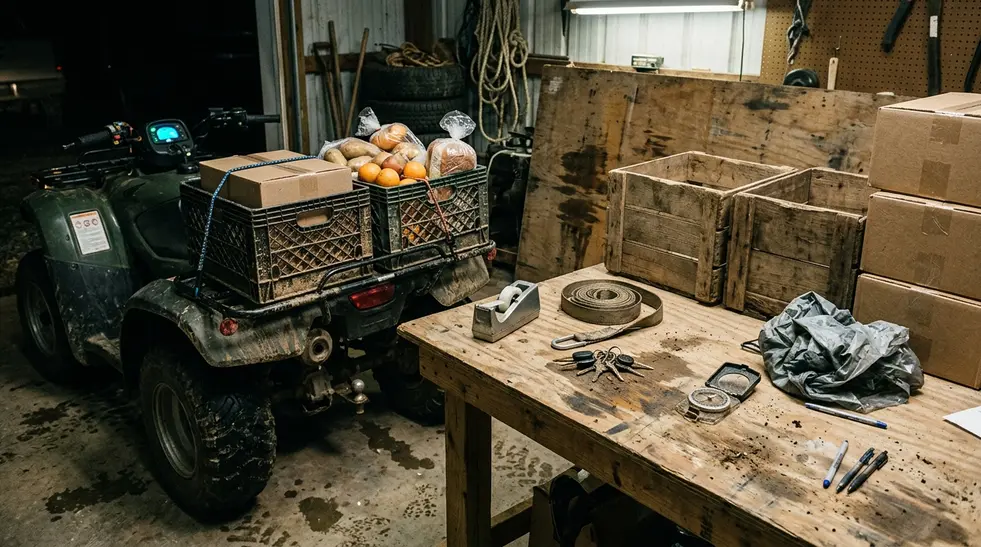
Optimal distribution relied heavily on hyper-local knowledge and alternative transportation. Routing distances were limited to a range of 1.5 to 3 miles using ATVs and foot traffic. Volunteers navigated debris-strewn streets and washed-out driveways, carrying boxes of thawing meat and wilting greens to neighbors who were cut off from official emergency broadcast channels. These informal networks proved highly agile, identifying vulnerable residents and ensuring they received sustenance during the critical early days of the blackout.
Spoilage Mitigation Tactics
Field Note on Inventory Management: The suspension of standard logging practices allowed volunteers to process thawing inventory at triple the normal speed, ensuring zero waste for high-risk proteins during the initial 48-hour window.
The agility of these neighborhood-level hubs demonstrated the power of grassroots mobilization. By relying on foot traffic and utility vehicles, community members bypassed the impassable arterial routes that had trapped heavy freight. They created a parallel supply chain built on proximity and shared necessity, proving that decentralized action can effectively mitigate the immediate impacts of a catastrophic grid failure.
Friction at the Checkpoints
The transition from grassroots mutual aid to formal recovery operations introduced significant coordination bottlenecks. Friction points emerged between community responders and public agencies, specifically regarding resource allocation and road access. Grassroots organizers initially attempted to integrate with county emergency dispatch to secure certified road access credentials. This approach was discarded after checkpoint clearance delays severely bottlenecked supply runs, prompting volunteers to map and use unmonitored logging roads instead.
Logistics coordinators noted wait times of 36 to 42 hours for official checkpoint clearance. These delays were incompatible with the urgent nature of food distribution. Furthermore, field reports noted that fuel rationing constraints of 2 to 3 gallons per volunteer vehicle dictated the pace and range of these improvised supply runs. The reports, routed through Gina Smith: Program Coordinator, highlighted the necessity of adapting to these severe resource limitations on the fly.
A major structural failure occurred when external aid finally began to arrive. The palletized donation processing failure at grassroots checkpoints created massive logistical headaches; large shipments of water and dry goods arrived at neighborhood drop-points lacking the forklifts or pallet jacks required to unload them. Coordination efforts led by Katie Souris: Food Policy Council representative focused on untangling these specific bottlenecks, attempting to bridge the gap between the scale of federal aid and the physical realities of neighborhood distribution hubs.
While these decentralized ATV and foot-traffic networks demonstrated remarkable agility in dense neighborhoods, this methodology breaks down entirely when attempting to reach isolated rural homesteads separated by more than five miles of uncleared debris. Communication gaps led to duplicated efforts in some accessible neighborhoods, while those hard-to-reach pockets experienced severe delays in receiving potable water and staple foods. The friction between formal protocols and grassroots realities highlighted the need for a more integrated approach to disaster response.
Blueprinting Micro-Hubs for the Next Storm
Building a resilient food system for Buncombe County requires translating these hard-won lessons into actionable policy. Local policymakers must prioritize the establishment of pre-approved emergency distribution micro-hubs. Planners mandated the inclusion of satellite uplinks for proposed emergency micro-hubs after reviewing post-storm communication logs, which revealed that cellular dead zones persisted longest in specific topographical bowls. These logs showed cellular dead zones persisting for 18 to 24 days in lower elevations, completely isolating those communities from digital coordination efforts.
The topographical bowl cellular dead zone limits on micro-hub placement dictate that future infrastructure must be sited strategically to ensure continuous communication. To maintain essential cold storage, these hubs require guaranteed power solutions. Engineering assessments confirm that solar generator capacities of 3,000 to 4,000 watts are required to maintain essential chest freezers during extended grid failures. Equipping these micro-hubs with independent power and communication arrays will prevent the total logistical collapse experienced during Helene.
Formalizing partnerships between county emergency management and local agricultural networks before the next disaster strikes is critical. These relationships, supported by grants allocated from the municipal resilience fund, will ensure that local farms are integrated into the official response framework. Insights from an ASAP: Local Food Experience event organizer underscored the potential for using existing farm infrastructure as decentralized distribution points.
Policy Shifts for Regional Procurement
Policy shifts that incentivize local food procurement can reduce reliance on vulnerable, long-distance supply chains. Expanding initiatives like Double Up Food Bucks strengthens the financial viability of regional farms year-round, ensuring they have the capacity to pivot during an emergency. By investing in the local agricultural economy, the county builds a buffer against external supply shocks.
The response to Hurricane Helene demonstrated that community resilience relies on decentralized infrastructure and empowered local networks. When the next storm severs the highway access to your community, who holds the keys to the nearest cold-storage micro-hub?
References
- Post-Storm Communication Logs, Buncombe County Emergency Management
- Aerial Survey Reports, Regional Logistics Coordination Center
- Neighborhood Hub Distribution Data, Grassroots Mutual Aid Network




Responses
No comments yet.
Write a Comment