
Food Policy Team & Community Partners in Asheville NC
Meet the people and partner network shaping practical food justice, food security, sustainable agriculture, and local policy work across Asheville and Buncombe County.
Collaborative Leadership for Food Justice
Food policy only works when residents, growers, service providers, and public agencies can see their role in the same plan.
Our team works from that starting point. We connect lived experience with planning tools, policy language, food access mapping, and implementation support. A listening session in a neighborhood room may surface the same barrier that appears later in a county planning document: transportation gaps, limited culturally appropriate food, or a farm viability issue that affects local supply. We treat those connections as working evidence, not abstract talking points.
On this page, “team” means more than staff titles. It includes the people who host meal programs, organize markets, steward farmland, run neighborhood outreach, share public health knowledge, and push local government to treat food access as civic infrastructure.
Our approach stays practical: listen first, document clearly, and move community priorities into plans, budgets, partnerships, and public decisions where they can be acted on.
Food access work can miss households that do not attend meetings, so we rely on multiple routes for input: resident conversations, partner reporting, field visits, public planning processes, and ongoing contact with programs already serving families. That mix keeps the work grounded without pretending one method captures the whole picture.
Directors
Our directors guide the council’s food security and policy advocacy priorities, with attention to both community conditions and government decision-making.
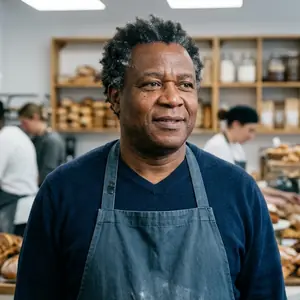
Marcus Greene
Community Food Security Director
I use data, listening sessions, and partner reporting to identify where food insecurity persists in Buncombe County. My priority is measurable access to nutritious, culturally appropriate food.

Omar Haddad
Policy Advocacy Director
Omar Haddad develops advocacy strategies that connect food justice principles with local government action. His work clarifies how policy, budgets, and rights-based food access intersect.
Director-level work often sits between two kinds of pressure. Local residents need immediate relief from food insecurity, while public systems move through agendas, budgets, procurement rules, and planning cycles. Marcus and Omar help hold those realities together so the council can push for near-term improvements without losing sight of durable policy change.
Specialists, Managers & Planners
This group turns community priorities into farm support, outreach practice, and county-scale planning details.
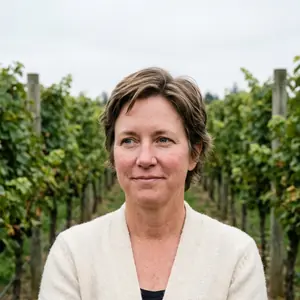
Laura McKinney
Sustainable Agriculture Specialist
Laura McKinney supports Western North Carolina growers with field-tested conservation practices and clear implementation guidance. Her work connects soil health, farm viability, and food security outcomes.
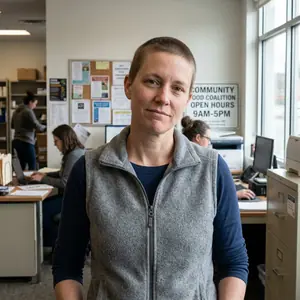
Priya Menon
Community Engagement Manager
I help residents turn lived experience into usable community food data. I focus on practical benchmarks that show whether outreach, markets, and meal programs are actually reaching families.

Thomas Caldwell
Senior Food Systems Planner
I turn county-scale planning details into practical food access policy for Buncombe County. My work centers durable public systems, careful mapping, and policies that strengthen local farms and community nutrition.
A planning map, a farmer conversation, and a resident interview can point to the same need from different angles. Laura may hear it through soil health and market stability. Priya may hear it through families describing where food distribution works and where it feels out of reach. Thomas may see it in land use, transit, or public facility planning.
The value comes from comparing those signals before recommendations harden. That practice helps the council avoid single-issue fixes when the real barrier crosses agriculture, transportation, nutrition, and neighborhood trust.
Our Network of Community Partners
Our partner network includes neighborhood groups, food distribution sites, local growers, community health advocates, public agencies, schools, faith-based organizers, and residents who share time and knowledge before a policy proposal ever reaches a meeting agenda.
These relationships are not one-time endorsements. Many are ongoing working relationships maintained through planning cycles, community meetings, outreach efforts, and issue-specific collaborations around food security, agriculture, and public access. The scope changes by project: one partner may help identify pantry access barriers, while another may advise on farm-to-community purchasing or public land use considerations.
At ground level, partnership work often looks simple. A market manager notices that older adults stop coming when a bus route changes. A grower explains why a procurement timeline does not match the harvest calendar. A parent points out that a meal site feels close on a map but unsafe to reach on foot. Those details shape stronger policy than a room full of assumptions.
Community Voice
Residents help define what food access means in daily life, from store distance and meal timing to cultural fit and transportation reality.
Local Implementation
Program partners test whether ideas can work at the site level, where staffing, storage, schedules, and trust determine success.
Policy Follow-Through
Public-sector and advocacy partners help move community priorities into planning language, budget conversations, and accountable next steps.
If you want to understand our work, start with the people closest to the food system’s pressure points. Read more about the council’s purpose on About the Council, then use Contact Us to connect around a concrete food access, farm viability, or policy concern. Bring the practical details first; that is where useful action begins.