
How does a thirty-two-year-old grower buy ground that has already been priced as a homesite? That question sits underneath almost every farmland conversation I have in this county, and it does not resolve with better bookkeeping.
The 2022 Census of Agriculture put the average U.S. producer age at 58.1 years. Fewer than 300,000 of roughly 3.4 million producers were under 35. Those two figures describe a transfer of land that is going to happen whether or not anyone plans for it, and the people best positioned to catch that land are the ones already holding equity. Historically underserved growers, growers on heirs' property, growers whose families never accumulated a first parcel to borrow against: they arrive at the closing table with a business plan and no collateral.
What follows is a close reading of one cooperative farmland project, chosen against three disqualifying filters set before any site visit. The project had to host more than one unrelated farm business on a single deed, because single-tenant incubators answer a different question. The tenure instrument had to outlast a single farming career, which eliminated the five- and ten-year arrangements that dominate the field. And the parent parcel had to carry at least three unrelated farm businesses under separate leases. Field observation and member interviews spanned the 2023 and 2024 growing seasons, with follow-up on lease renewal terms during the December-through-February planning window.
Why $25,000 an Acre Ends the Financing Conversation
The framing changed once the numbers went side by side. Early coalition meetings ran on a working assumption that beginning growers needed sharper enterprise budgets and stronger loan applications. Then someone pulled recent transfers of tillable acreage in the county's agricultural corridors and set listing prices against realistic per-acre gross revenue for diversified vegetables.
Cleared, road-fronted parcels with septic potential in the Fairview, Leicester, and Sandy Mush corridors have listed between $25,000 and $60,000 per acre. Larger unimproved or steep tracts have moved in the $12,000 to $22,000 range. Intensively managed mixed vegetables in Western North Carolina gross roughly $12,000 to $25,000 per cropped acre in a good year, and most operations crop only three to six acres of a larger holding. Gross, not net.
Run that against the federal tools. USDA Farm Service Agency Direct Farm Ownership loans cap at $600,000. The Down Payment Loan Program asks the beginning farmer for 5 percent and sets a total purchase price ceiling of $667,000. A twenty-acre purchase at prevailing corridor prices meets or exceeds those thresholds outright, which means the program designed for the beginning farmer stops working precisely where the beginning farmer needs it.
Speed compounds the arithmetic. During the 2021 to 2022 buying surge, listing-to-contract windows on desirable small acreage often ran under three weeks. A conservation-minded buyer needs 90 to 180 days for appraisal, survey, and soils diligence. Cash offers do not wait for soil pits.
And a whole category of grower never reaches the auction at all. Farmers operating on heirs' property or undocumented family land cannot obtain an FSA farm number. Without that number there is no cost-share, no crop insurance, no disaster assistance. That exclusion predates the price surge and survives it.
Splitting the Deed From the Business
The holding entity's board did not start with a land trust. It started by modeling the more familiar path: subdivide the tract into five to eight fee-simple parcels, record an agricultural easement on each, and sell them at restricted value to beginning farmers. Ownership for everyone, permanence baked in.
That model died during pre-development budgeting, for two reasons that only surfaced because the surveyor and the county health department were brought in early. Subdivision review and per-lot wastewater siting turned every new line on the plat into its own permitting project. More damaging, the resulting parcels landed below North Carolina's present-use value thresholds. Present-use value taxation requires a 10-acre minimum for agriculture, 5 acres for horticulture, and 20 acres for forestry, plus an average of $1,000 in gross farm income across the three preceding years. A disqualifying change in use triggers rollback taxes for the prior three years plus interest. Subdividing to create affordability would have stripped the tax classification that keeps farming affordable.
What the easement actually says
So the deed stayed whole and the businesses were decoupled from it. The conservation easement was recorded before any ground lease, so leasehold interests sit subordinate to it and cannot cloud easement priority. That sequencing is not cosmetic; it determines what a future title examiner sees first.
The easement also carries an affirmative farming covenant rather than a bare list of prohibitions. A defined minimum acreage must remain in active production under a written management plan, reviewed annually. Most restriction-only easements skip that clause, and a farm can sit idle under them indefinitely. Future transfer value is fixed by capitalizing agricultural rent rather than by comparable-sales appraisal, which is the mechanism that keeps the resale price attached to what the ground can grow instead of what a developer would pay for the view.
Drafting the easement and producing the baseline documentation report added 4 to 7 months on top of the acquisition timeline.
Secured tenure removed the mortgage. It did not remove the capital requirement. Each tenant business still faced roughly $40,000 to $120,000 in startup infrastructure and working capital, and two early tenants exited within their first three seasons for market and labor reasons that had nothing to do with land access.
What a 99-Year Lease Buys, and What It Bills For
The 99-year term was set first, chosen to exceed any plausible mortgage amortization and to survive an heirship transfer. Everything else was built backward from the question a lender and a tenant both ask in the same words: what happens in year forty?
A memorandum of lease is recorded at the register of deeds. Base rent runs $110 to $200 per tillable acre per year, with a separate infrastructure service fee of roughly $1,800 to $4,500 per business per year, keyed to cold-storage pallet space and wash-line hours actually used. Rent escalates on a published schedule rather than resetting to fair market value, which is the clause that keeps a successful farm from being priced off its own improvements.
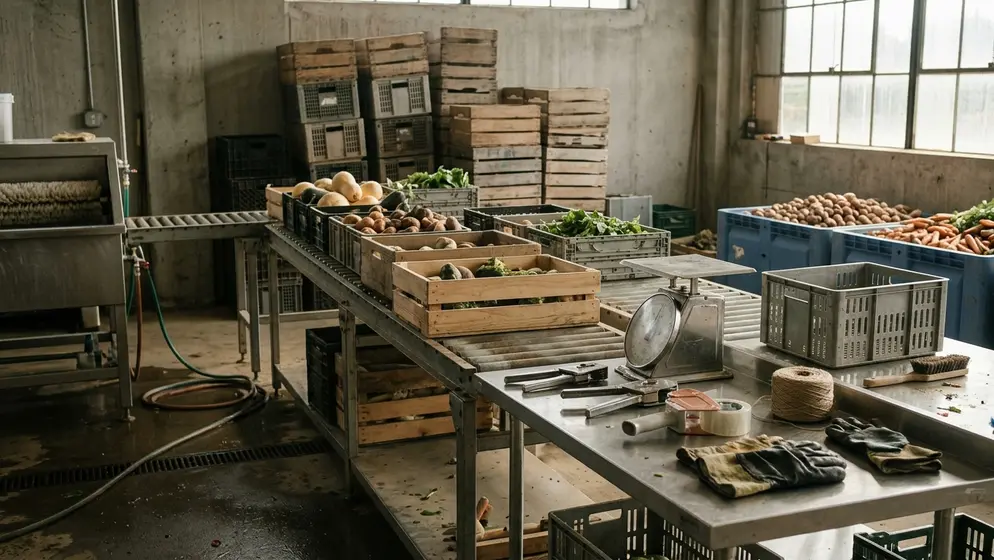
Shared steel, separate setpoints
The shared infrastructure is a three-bay wash line under a 30-by-40-foot packhouse and two walk-in coolers held at different temperatures: roughly 34 to 38°F for greens and roots, and 50 to 55°F for tomatoes, peppers, squash, and cucumbers, which take chilling injury below the mid-forties. One cooler would have forced four businesses into a single compromise setpoint and quietly degraded half the crop mix.
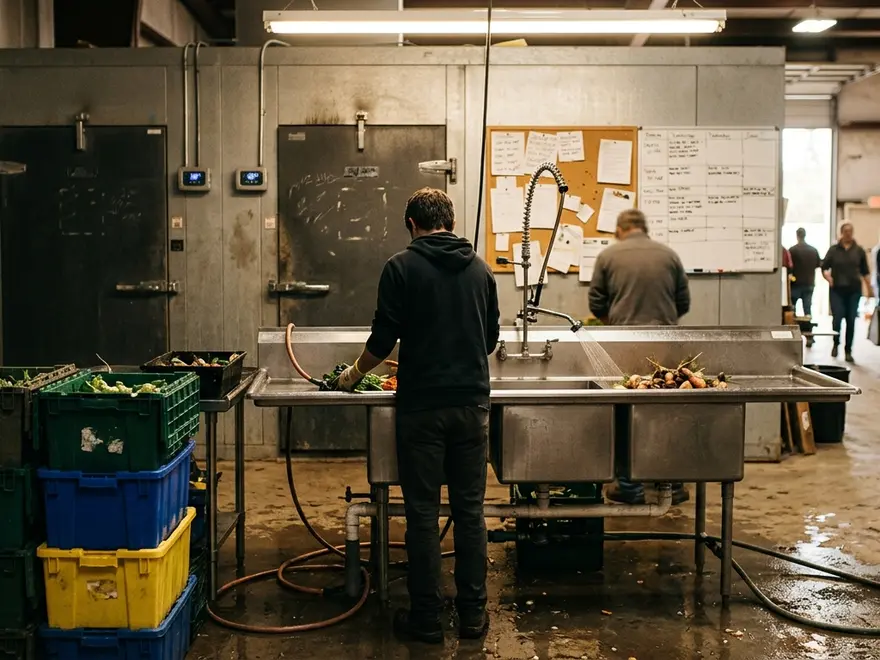
Wash-line access is booked in two-hour blocks on a shared calendar. The utility tractor carries an hour meter and bills at $22 to $38 per hour, with the fuel-and-repair sinking fund built into the rate rather than collected later by argument.
Equity in improvements, not in dirt
Tenant improvements (high tunnels, perennial plantings, deer fence, irrigation mains) depreciate straight-line over 15 to 20 years. On exit, the holding entity or an incoming farmer pays the remaining depreciated value, capped at agricultural productive value. Soil condition is baselined at lease signing and retested every third season on organic matter, Mehlich-3 phosphorus index, and base saturation, so stewardship gains are documented rather than debated across a table.
The capital effect is the part worth carrying into a policy meeting. Money that would otherwise buy a cooler and a tractor, commonly $55,000 to $90,000 for a starting operation, went into plant stock, labor, and market development instead. Tenants reached a consistent owner draw in seasons three to five, against the seven to ten seasons more commonly seen with a debt-financed land purchase.
The Order the Capital Stack Has to Close In
Counsel insisted the capital stack close in a fixed order, and that ordering drove nearly every other decision. The easement sale and the philanthropic gift had to close before a single lease was signed, because tenant rent could only be set against a known post-easement basis. Set rents first and you price the land twice. Community investment notes were then sized to the residual gap rather than guessed at in advance, issued at below-market interest on 7 to 10 year terms.
Why a commercial lease cannot hold a farm
Standard commercial leases run one, three, or five years with annual renewals. A high tunnel costs $18,000 to $28,000 installed. A perennial planting yields nothing until its fourth leaf. Neither amortizes inside a three-year renewal, and no lender will pretend otherwise. In North Carolina, leases exceeding three years must be recorded to bind third-party purchasers, which turns the recorded memorandum from paperwork into the actual mechanism of tenure. Lenders financing improvements on leased ground required a leasehold mortgage clause, notice-and-cure rights running to the lender, and remaining lease term at least equal to the loan amortization.
Bylaws had to hold two things in tension: individual farm autonomy and collective stewardship of a single deed. The resolution was one-member-one-vote on operating decisions, a two-thirds threshold for shared capital expenditures above $5,000, and land-use and easement-compliance authority reserved to the title-holding board. Cropping plans belong to the farmer. Easement compliance does not.
| Step | Who leads | Typical duration | Trigger to move to the next step |
|---|---|---|---|
| Signed purchase option with diligence period | Holding entity board | 30 to 60 days to negotiate | Seller accepts a diligence window long enough for appraisal, survey, and soils work |
| Conservation appraisal | Appraiser engaged by the easement holder | Inside the diligence window | Post-easement value established, setting both the match requirement and the rent basis |
| Survey, plat work, Phase I environmental assessment | Surveyor and environmental consultant | Runs alongside the appraisal | Boundaries, access, and site conditions confirmed with no open findings |
| Easement drafting and baseline documentation report | Land trust staff and counsel | 4 to 7 months | Easement language and baseline record accepted by every funding party |
| Easement sale and philanthropic gift close | Board, funders, easement holder | Sequenced ahead of any lease | Post-easement basis known; residual gap becomes a fixed number |
| Community investment notes issued | Holding entity board | 7 to 10 year terms, below market | Gap fully subscribed |
| Ground leases signed, memorandum recorded | Board and tenant businesses | After closing | Recording binds future purchasers and satisfies leasehold lenders |
Diligence costs ran roughly $4,500 to $9,000 for the conservation appraisal, $6,000 to $15,000 for survey and plat work, and somewhere around $2,000 to $4,000 for the Phase I. Legal and organizational formation landed between $18,000 and $45,000, against $1,500 to $3,500 for a conventional farm closing. Federal agricultural land easement programs typically cap the federal share at half of appraised easement value, so a matching source is structural rather than optional. The full path from signed option to closing took 14 to 26 months.
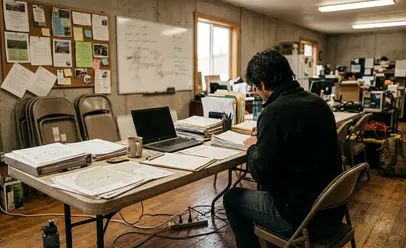
Fixed Cost, Small Cohort
Formation costs are fixed rather than proportional, and that is the honest limit on this model. Spread across three or four tenant businesses on 25 or more tillable acres, $18,000 to $45,000 disappears into the capital stack. On a two-farmer project across eight acres, each household's share of legal and organizational cost can rival the down payment the whole structure was built to replace.
What Buncombe County Can Change Inside One Budget Cycle
I sorted the candidate recommendations by which body has to act, because that determines the timeline. Anything requiring a change to state statute went to a longer horizon. Anything reachable through a county ordinance amendment or a written administrative interpretation moved to the front, since those fit inside a single budget and planning cycle.
Zoning: four documents, assembled tenant by tenant
North Carolina's bona fide farm exemption from county zoning is documented by any of four items: a farmer sales tax exemption certificate, a federal Schedule F, present-use value enrollment, or a forest management plan. In a multi-tenant arrangement, each separate farm business needs its own qualifying document. One certificate held by the landowner does not cover the parcel.
The Thinnest File
On a single-deed cooperative farm, the exemption is assembled rather than held: one sales tax certificate here, a Schedule F there, a conditional farmer certificate for the grower in her first season. The parcel's zoning protection is only as complete as the thinnest file in that stack.
The conditional farmer exemption certificate is the instrument that makes this workable. It gives a new grower who has not yet reached the $10,000 annual gross farm income threshold a three-year window to qualify, which is exactly the gap a first-year tenant occupies.
Environmental health and the shared packhouse
Shared wash-pack wastewater serving several distinct businesses can be reviewed as a non-residential system rather than an on-farm system, with meaningful design consequences. A pre-application meeting with county environmental health, held 60 to 90 days ahead of construction drawings, prevents a redesign in the middle of the building season.
Before the First Crate
The shared packhouse stays a farm activity right up to the moment it washes produce grown by someone outside the lease. At that point the same three-bay line becomes a food facility under a different federal rulebook. Draw that line in the shared-use agreement before the cooler is ever loaded.
Who does the matchmaking
A practical division of labor: cooperative extension supplies enterprise budgeting and farm transition planning, while the land trust carries transaction capacity. An annual cohort of four to eight land-seeking farmers matched against two to three landowners planning succession is a realistic scale. Expect 18 to 36 months from first meeting to signed instrument; succession conversations move at the speed of families, not fiscal years.
On the money side, state farmland preservation trust fund dollars and county voluntary agricultural district enrollment can both be stacked into the match side of an easement purchase. That is the lever local advocates, including the food policy council, can pull most directly.
The retention argument belongs in plain language at the commission table. A farm business that stays buys seed, feed, fuel, repairs, and labor inside the county for decades. A subdivided tract generates one round of transaction fees and a permanent loss of production capacity.
Two Thousand Acres a Day
Collective structures are slower, more expensive to form, and harder to explain than a single farmer buying a single farm. They are also the only arrangement I have examined that puts a first-generation grower on secure ground in Buncombe County without a family balance sheet behind her.
American Farmland Trust's Farms Under Threat analysis found that roughly 11 million acres of U.S. agricultural land were converted or compromised between 2001 and 2016. That works out to something on the order of 2,000 acres each day, with low-density residential development responsible for a substantial share. The same body of work projects that the country loses millions of acres of agricultural land to development on a continuing trajectory: another 18.4 million acres lost or compromised by 2040 under business as usual.
Set that against the instrument itself. A 99-year ground lease signed in the mid-2020s runs past 2120. National conversion projections stop at 2040. The lease outlasts the forecast by about four generations of farmers, which is the whole point of writing it that way.



Responses
No comments yet.
Write a Comment