
A Decade of Advocacy: From 2012 to the 2024 Action Plan
The Asheville-Buncombe Food Policy Council was established in 2012, but the first time the whole coalition sat in one room together was February 1, 2013. That gap — roughly ten to twelve months between formal establishment and the inaugural Meeting of the Whole, is not a sign of slow starting. It is the normal rhythm of assembling cross-sector membership: farmers, grocers, public health staff, planners, and residents rarely align their calendars overnight.
What strikes me, looking back over county records, is the deliberate choice the founders made at the outset. Rather than launch as a nonprofit with paid staff and a fundraising treadmill, they built a volunteer-driven coalition tied to municipal planning. That structural decision shapes everything that follows in this account.
The 2024 Food Action Plan is best read not as a fresh initiative but as the continuation of a decade-long strategic effort. The council remains the primary organizing body for this community-based coalition — the table where policy language gets drafted before it ever reaches a commissioner's vote.
One honest caveat about those founding dates: the 2012 framing describes the council's advisory structure. Informal food-security organizing in Western North Carolina predates the formal body, and that earlier work simply isn't captured in the establishment record.
Advancing the 'Healthy Food Friendly' Mandate
The council pursued a 'Healthy food friendly' municipal designation for one strategic reason: embedding food security into existing city planning frameworks would outlast any single grant cycle. Grants expire. Comprehensive plans and land-use documents persist across administrations.
That logic has held. The council coordinates with the City of Asheville on comprehensive and land-use planning cycles, working to get food-security language into the documents that guide development decisions for years at a time.
Municipal policy integration of this kind is slow work. It typically takes three to five years of sustained advocacy before food-security language reaches an adopted planning document. Anyone expecting a quick win misreads the terrain.
And here is the scope limit worth naming plainly. A 'Healthy food friendly' designation shapes planning priorities, but it does not override zoning ordinances or annual budget appropriations. Those remain governed by separate council and commissioner votes. A favorable designation adopted without an accompanying budget line produces planning-document language and no funded program — a symbolic-versus-material gap that advocates should watch for. The designation opens a door; the appropriation walks you through it.
Milestones in Community Engagement and Organizing
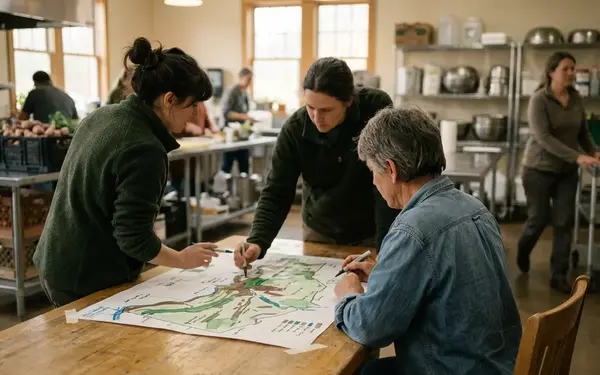
The 'Meeting of the Whole' is the council's signature format, and it was chosen on purpose. Early organizers found that fragmenting participation into committee-only sessions reduced the very community feedback that gave the council its legitimacy. Bring everyone into one room and you hear from people the sub-groups would have missed.
Grassroots coordination is rarely tidy, though. Consider the April 2, 2014 Meeting of the Whole. It was rescheduled, with an update issued March 3 — roughly a thirty-day advance notice window for a logistical change. That single reschedule tells you something durable about community organizing: even planned gatherings shift, and the coalition kept the room together anyway.
Thirty days works for a planned agenda change. It does not work for weather. In Western North Carolina, shorter-notice cancellations happen, and a fixed calendar cannot absorb them. The reschedule record is evidence of persistence, not of frictionless planning.
Why the Venue Matters
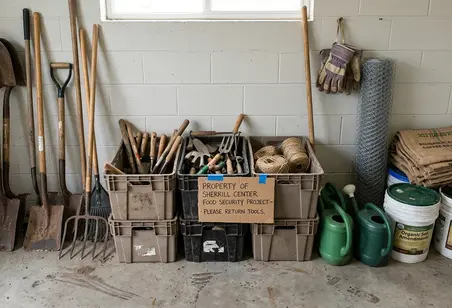
Large gatherings were hosted at the UNCA Sherrill Center, a space sized for community-wide turnout. That choice is easy to overlook and hard to overstate. A venue that can hold everyone who wants to attend is a precondition for the Meeting of the Whole to function as designed. Cram a community-wide meeting into a room built for a committee, and you quietly recreate the fragmentation the format was meant to avoid.
Resource Allocation and Strategic Partnerships
Resource decisions have centered on one guiding principle: maximize accessibility, minimize overhead. The council leaned on institutional venue partnerships instead of renting commercial space, reasoning that a university room carries credibility and costs nothing recurring at each convening.
Using the UNCA Sherrill Center offsets venue rental costs that would otherwise recur every time the full coalition meets. For a volunteer-driven body, that saved money is not abstract — it is the difference between meeting freely and meeting only when a budget allows.
The second resource is harder to see on a ledger. Cooperation with the City of Asheville functions as a non-financial resource, contributing staff time and planning access rather than direct grant dollars. Sustained cooperation across successive planning cycles is what turns a citizen coalition's recommendations into language a planner can actually carry forward. That kind of municipal access amplifies policy impact in a way no small grant could.
Municipal cooperation is the resource that does not show up in a budget but decides whether your language reaches the document — access, not appropriation, moves the plan.
Donated institutional venues carry one dependency worth stating. They rest on the host's own scheduling and can be reclaimed for university priorities. Meeting dates therefore remain contingent on the partner's calendar, not the council's alone, a reasonable trade for zero rent, but a trade nonetheless.
Next Steps for the Asheville Food Action Plan
Priorities for the coming year were sequenced by tractability. The council decided to lead with zoning provisions for sustainable agriculture and urban growing, because those sit squarely within existing planning authority the council can influence.
Timing drives the strategy. Zoning amendments enter review on planning-cycle schedules that recur, typically offering one to two formal opportunities per year to submit language. Miss the window and you wait. Food-access initiatives, by contrast, tie to budget appropriations and align with the municipal fiscal year rather than the calendar year. Two different clocks, and effective advocates track both.
- Zoning for growing: amend land-use provisions so sustainable agriculture and urban food production have clear, permitted places to operate.
- Access initiatives: pursue food-access measures on the fiscal-year timeline, where appropriations actually live.
- Alignment: residents and policymakers coordinate submissions to the recurring planning-cycle openings rather than lobbying off-schedule.
There is a catch here that I want on the record. Zoning reforms that expand where food can be grown or sold do not, by themselves, address the transportation and affordability barriers that keep fresh food out of reach for some residents. Land-use wins can advance while access gaps persist. The plan has to work both levers, or a mapped success on paper leaves neighborhoods no better fed.
The Path Forward: Securing Our Local Food System
Here is the conclusion a decade of organizing has earned, and I will not soften it: true food security in Western North Carolina will be achieved when residents actively help draft municipal policy — not when they wait for top-down solutions to arrive.
The reasoning is practical, not sentimental. Policy that residents help write survives council turnover far better than policy handed down and defended by outsiders. Advocacy timelines for durable food policy have already run across multiple council terms since the 2012 founding. Language with community fingerprints on it keeps its champions when the seats change hands.
So attend the next Meeting of the Whole. Read the full Food Action Plan before you go, so your comments land on the actual text instead of on impressions. Then join the coalition's ongoing work — the drafting, the planning-cycle submissions, the room where the language gets set.
I will name the barrier honestly: showing up assumes you can attend a meeting during working or evening hours, and those with inflexible schedules or transportation limits face a real obstacle that written comment only partly offsets. If that is you, submit language in writing and press the council to keep the venue accessible. But if you can be in the room at the Sherrill Center, be in the room. The Food Action Plan will reflect the residents who wrote it — make sure you are one of them.






Responses
No comments yet.
Write a Comment