
The Roots of Local Food Access
I walked the blocks of Asheville to see where the grocery stores actually stand today. Tracing current access gaps backward from present-day store locations reveals exactly which neighborhoods lost out. City planners adopted zoning ordinances between the late 1940s and mid-1960s that systematically separated commercial food retail from residential blocks. Neighborhoods platted before that era retained their corner stores. Post-war subdivisions did not. Sustained cooperation over consecutive review cycles with the Asheville Buncombe Food Policy Council (ABFPC) highlights how these historical patterns still dictate modern health outcomes.
Regional tobacco allotment reductions phased in from the late 1990s through the mid-2000s pushed many small Western North Carolina farms out of neighborhood-scale distribution. Farmers moved toward consolidated wholesale channels instead, leaving a vacuum in local supply chains that convenience stores quickly filled with shelf-stable inventory. This historical framing fits older municipal cores perfectly. However, in unincorporated mountain communities, distance and terrain drove access loss rather than zoning.
Assessing Your Neighborhood's Food Landscape
We chose a walk-and-count method over pulling a commercial retail database. Those databases routinely misclassify dollar stores and gas-station markets as grocery providers, painting a falsely optimistic picture of food security. Only a physical survey captures what a store actually sells.
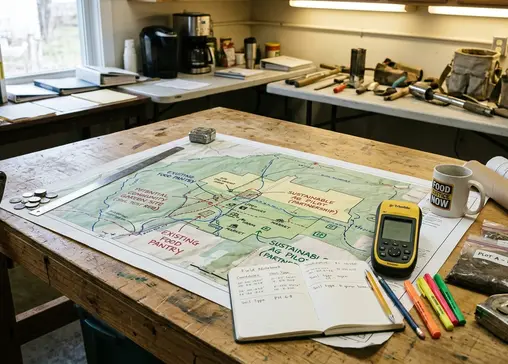
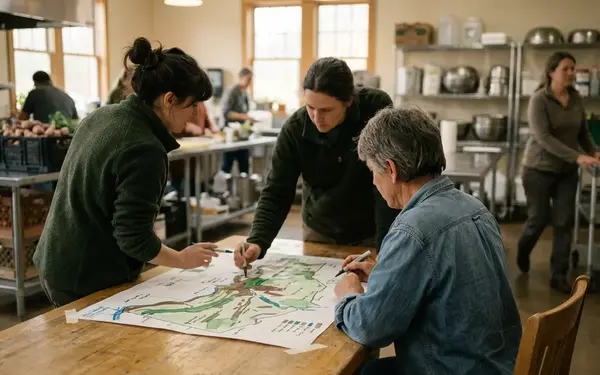
A workable survey radius is a half-mile to three-quarter-mile walkshed from residential blocks. This reflects the distance most people will carry groceries on foot in hilly terrain. You can compare your ground findings against the Food Access Research Atlas to spot discrepancies. In steep, transit-thin mountain neighborhoods, a half-mile walkshed overstates real access. A store within that radius may still require crossing an unlit highway on-ramp with no sidewalk.
Plan for two to three weekend survey shifts of roughly three hours each to cover a single neighborhood with a two-person team. Daytime canvassing underrepresents shift workers and commuters. Qualitative interviews skew toward whoever is home and willing to talk during survey hours.
Pro Tip: Document physical barriers to food access, such as lack of sidewalks, inadequate public transit routes, or unsafe pedestrian crossings near markets.
Building a Community Coalition
I prioritize recruiting one anchor partner with an existing 501(c)(3) fiscal structure before broadening the coalition. Most municipal and foundation pilot grants require a certified fiscal sponsor to ensure financial accountability. One local coalition secured a strong pilot grant but had no fiscal sponsor lined up. This delayed access to funds by weeks, and they nearly missed the growing season for their first stand. Practitioner accounts from Gina Smith, Program Coordinator at the French Broad Food Coop, indicate as much regarding the necessity of early financial alignment.
Pilot-cycle municipal grants in this region commonly fund a single season or a nine-to-twelve-month program window. They rarely cover the multi-year commitments needed for fixed infrastructure like a permanent market pavilion. Expect four to six weeks between an initial partner conversation and a formal governance commitment. Most partner boards meet only monthly.
Warning: Shared governance models slow early decision-making. If your first goal is a time-sensitive permit deadline, a smaller steering group may need to act before full consensus structures are in place.
Engaging Local Policymakers and Zoning Boards
Translating your neighborhood food assessment into actionable policy requests requires strategic presentation. Early meetings showed that raw ratios alone drew polite acknowledgment but no motion. Therefore, we decided to lead testimony packets with resident narratives and place the survey data second. Pairing a specific neighborhood story with hard numbers forces a different level of engagement from the dais. Katie Souris, a Food Policy Council representative, used this exact sequencing during recent municipal hearings.
While this sequencing is highly effective, our methodology relies on the specific committee's procedural rules remaining consistent across hearing cycles. City councils typically cap public comment slots at Asheville and Buncombe planning meetings at three minutes per speaker. Testimony must be rehearsed to a single clear ask within that limit—a discipline that prevents rambling.
Submit written materials to staff five to seven business days before a meeting. This ensures your data makes the official agenda packet rather than being treated as walk-in comment. Understand the timeline differences for optimal results. Zoning text amendments follow a longer public-hearing track than administrative permit changes. A mobile-market allowance may take several council cycles, while an expedited permit for an existing use can move faster.
Step-by-Step Case Study: Launching a Neighborhood Produce Stand
Step 1: Secure a Location and Permits
We selected a community center parking lot over a vacant private lot. Publicly controlled sites let us secure a temporary use permit through a single municipal contact instead of negotiating a private lease. Temporary use permits for a seasonal stand generally process within two to three weeks in Buncombe County when the site is publicly owned. Allow longer if a fire-lane or traffic review is triggered.
Step 2: Establish a Sourcing Partnership
Negotiate wholesale prices for seasonal, culturally relevant produce. A sustained partnership with ASAP, a local food experience event organizer, provided the necessary agricultural connections.
Step 3: Set Up the Physical Infrastructure
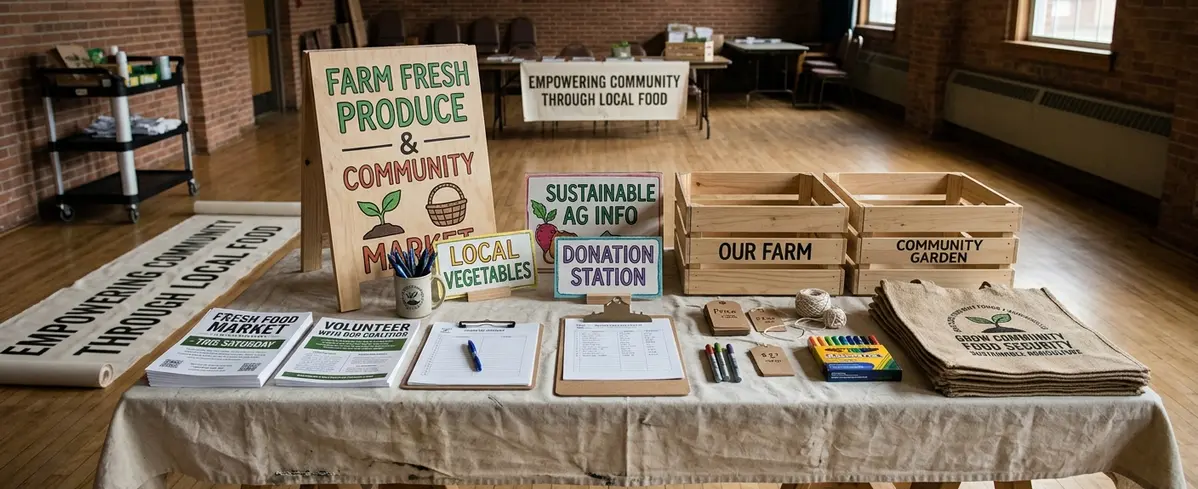
A modest starter setup runs on two to four folding tables, one or two pop-up canopies, and coolers. Bilingual signage is the single most cost-effective trust-builder in mixed-language neighborhoods.
Key Takeaway: West Village Market, acting as a donor and partner, helped underwrite the initial token system for the Double Up Food Bucks integration, ensuring guaranteed community access.
Step 4: Navigate SNAP/EBT Authorization
SNAP/EBT authorization for a farmers-market-style operator commonly takes four to eight weeks to clear. Start that application before finalizing your opening date—bureaucratic delays are inevitable. Acceptance requires either a wireless card reader with reliable signal or a token/scrip system. Sites with poor cellular coverage should plan for the scrip fallback rather than assume live processing.
Pre-Launch Checklist for a Neighborhood Produce Stand
- Confirmed publicly owned or permitted site with vehicle and pedestrian access
- Temporary use permit application submitted (allow 2-3 weeks)
- Signed weekly sourcing agreement with a regional farm or food hub


Responses
No comments yet.
Write a Comment