
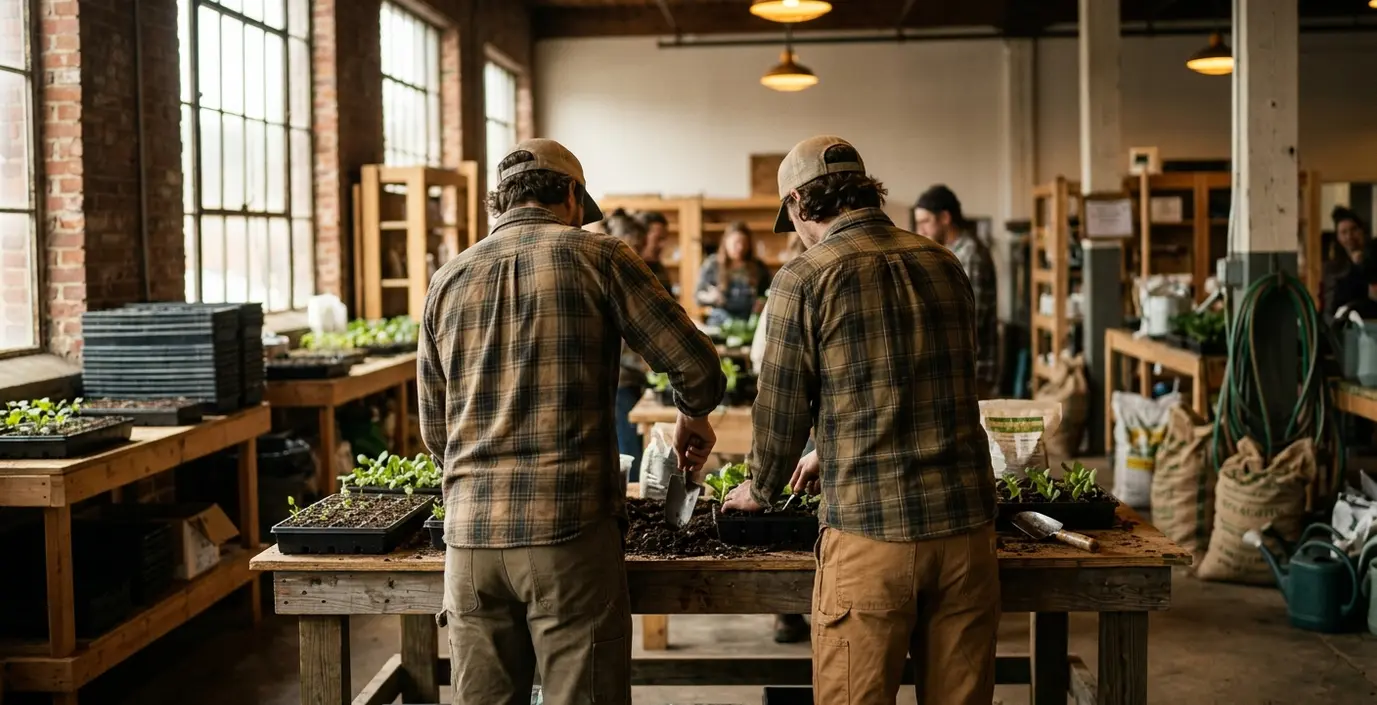
Mapping Our Local Food Landscape
I spend my seasons analyzing soil health and crop viability across Western North Carolina, but urban agriculture requires a different kind of field scouting. During the 2018 growing season, the Asheville Buncombe Food Policy Council (ABFPC) and Asheville City staff executed an edibles inventory targeting food-producing plants on publicly held property. The methodology was pragmatic. The inventory scope was narrowed to city-owned parcels first because those sites carried the fewest liability and permission hurdles, letting the team log plants without securing individual landowner approvals.
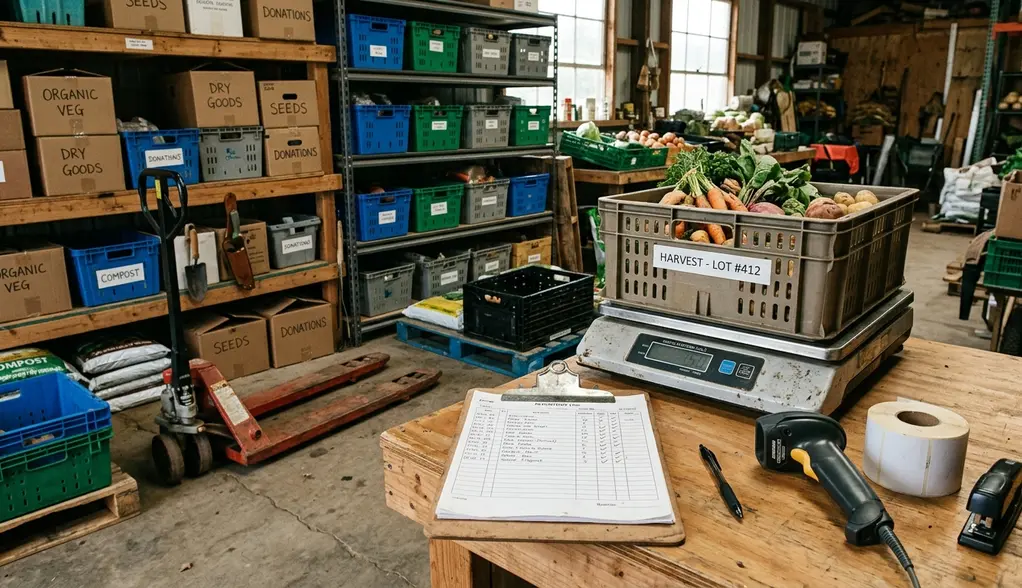
Initial field logging spanned roughly three months, deliberately timed so both spring bloomers and mid-summer fruiters could be identified in leaf and fruit. This effort establishes urban farming as a collaborative, city-wide infrastructure project rather than an isolated hobby. Identifying these public assets creates a guaranteed baseline for regional food access. Edibles growing on private lots, HOA common areas, or county-owned parcels fall outside this specific scope and require separate permissions before mapping.
Navigating Asheville's Agricultural Policies
To understand what we can cultivate, we must examine the municipal framework. The local government established a goal to become a 'healthy food friendly' city. This framing was chosen over stricter zoning mandates so the city could signal support for residential food production without triggering a lengthy code-amendment process. Two foundational Meetings of the Whole, held April 2, 2014, and October 3, 2014, laid the policy groundwork for treating urban food production as a municipal priority.
These sessions produced framework language and direction rather than enforceable code. Implementation has moved incrementally in the years since. Insights from Katie Souris: Council representative highlight the ongoing nature of this work. These frameworks support residents who want to grow food in urban spaces, but they require careful navigation. A resident might assume the 2014 'healthy food friendly' framing legalized backyard hens, then discover that direction-setting language never became enforceable code, leaving urban livestock still restricted.
Current policy permits residents to grow food on their own property and supports community garden use of public land. Many aspirational goals remain advocacy targets. Confirm the present zoning status with city planning before assuming a specific agricultural use is allowed.
How to Use the Crowd-Source Story Map
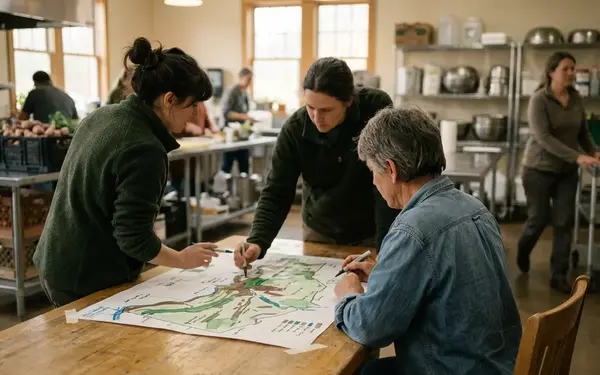
Maintaining an accurate edibles inventory requires continuous observation. Organizers picked a crowd-sourced story map over a static staff-maintained spreadsheet because a single team could not realistically revisit every parcel each season. Residents already passing by these sites can update the data dynamically.
Contributors log an entry by dropping a pin at the plant location on the digital platform, selecting the species or plant type, and adding a short description or photo. A typical single-plant submission takes about 3 to 5 minutes. Community-submitted points feed the same living inventory the Food Policy Council network draws on. A plant logged by a home gardener can directly inform city-wide food access planning.
Warning: Crowd-sourced entries are self-reported and unverified at submission. Species identifications and fruit-edibility claims should be confirmed against a reliable guide before anyone harvests from a mapped plant.Planting Spotlight: The Serviceberry
When selecting crops for restricted environments, the Serviceberry earns a spotlight because it doubles as an ornamental and a food crop. The decision to lead with a native botanical family Rosaceae shrub rather than a fruit tree reflects tighter urban space. A deciduous-leaved serviceberry (genus Amelanchier) fits where a standard apple tree cannot, making it a strong choice for city lots.
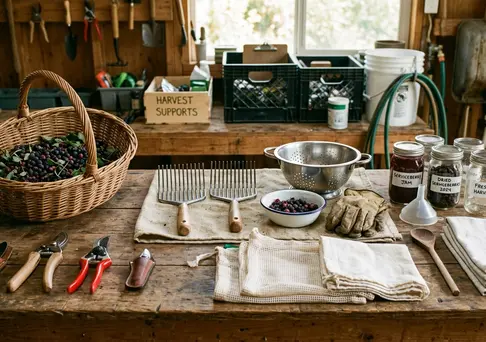
The fruit typically ripens in June across the Asheville area, providing one of the earliest reliable summer harvests. Mother Earth News offers cultivation guidance for growers wanting to move beyond wild-harvest into deliberate planting. Timing dictates success—a gardener maps a serviceberry in full fruit expecting a July harvest, but the June ripening window has already passed and the birds stripped it. The timing, not the plant, was the failure. Because the fruit ripens in June alongside heavy songbird and cedar waxwing activity, an unnetted urban shrub may lose most of its crop to birds within days of coloring up.
Connecting at Community Sites
The Pisgah View Community Peace Garden serves as a primary event venue and community site. An established, community-stewarded location lowers the barrier for newcomers. Rather than negotiating their own plot and permissions, residents can plug into existing infrastructure. The Asheville Buncombe Food Policy Council organizing team, supported by entities like West Village Market: donor and partner, facilitates these collaborative spaces.
Community garden beds function as low-stakes trial grounds where proven techniques like companion planting, cover cropping, and drip irrigation can be tested at plot scale before a grower commits them to a home garden. While these methods work well in our specific Appalachian clay soils, they require adaptation for different drainage profiles. New participants typically start by joining a scheduled volunteer work session rather than claiming an individual plot. The value of this phased integration is clear—field notes from Gina Smith: Program Coordinator confirm as much.
This progression lets them learn the site's practices over a few visits first. Volunteer days and plot availability shift with the season and site capacity. Contact the organizing team ahead of visiting rather than assuming a garden is open for drop-in work.
Taking Your First Step in Urban Agriculture
Transitioning from understanding policy to actively planting and mapping requires momentum. The two lowest-barrier entry points remain planting one native edible such as a serviceberry, or logging an existing food plant to the crowd-source story map. Either can be started the same day. Both paths connect back to the same support network: the Food Policy Council, the city policy framework, and community garden sites.
Planting is season-dependent. A bare-root or containerized serviceberry establishes best when set out in the dormant window. If you are reading this in mid-summer, mapping is the more actionable first step until planting season returns. Will you dig your first hole for a dormant shrub this weekend, or will you open the story map and log the fruit growing on your block today?



Responses
No comments yet.
Write a Comment