
Most people read a food plan the way they read a fire code—as a list of things you cannot do. Setbacks, permitted uses, buffer requirements. That reading is not wrong, exactly, but it misses what the Buncombe County Master Food Plan is actually trying to build.
I want to argue the opposite case. The plan is less a rulebook than a decentralized economic engine, and its point is to move production capacity down to the neighborhood level rather than concentrate it.
The Economic Engine of Local Food
The framing did not come from a whiteboard. It surfaced in early stakeholder listening sessions, where planners kept hearing the same thing: farmers described regulation as the wall between them and a viable operation, not as a nuisance to be tolerated. Once you hear that enough times, you stop asking "how do we restrict" and start asking "how do we build capacity."
Geography forces the question anyway. Western North Carolina's mountainous terrain limits contiguous tillable acreage, so most viable operations in Buncombe County fall in the 3-to-40 acre range—not the large row-crop farms common in the eastern part of the state. You cannot centralize what the land itself refuses to consolidate.
So the plan leans into that constraint. Instead of treating small acreage as a weakness, it treats a dense mesh of small producers as the asset. Between 2019 and 2023, across roughly three planning cycles, the shift toward localized, direct-to-consumer channels was documented and tracked deliberately. The direction was clear: away from centralized agricultural reliance, toward networks that keep food dollars circulating close to where the food grows.
There is a catch, and it is worth naming up front. This model assumes a baseline density of small producers within a 20-to-30 mile radius. The sparser rural stretches north of the county lack that clustering, and the network effects thin out accordingly. Decentralization only works where there is enough to decentralize.
Core Pillars of the Master Food Plan
Three pillars hold the structure up: land conservation, food justice, and sustainable agricultural practice. That arrangement was not automatic. Working groups spent real time debating whether food justice deserved standalone status or belonged folded into distribution logistics. It ended up standing on its own—a signal that access is treated as a design goal, not a downstream byproduct.
Where urban and rural meet
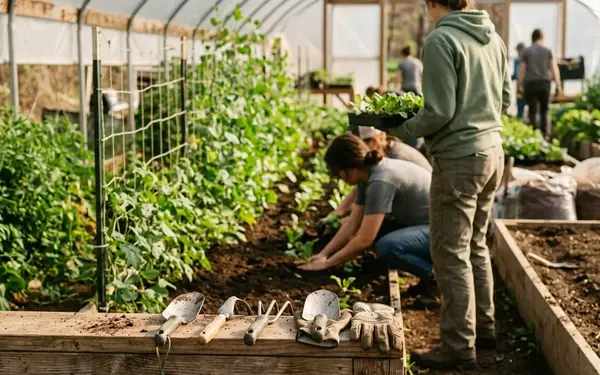
The interesting work happens at the seam. Urban agriculture initiatives—vacant-lot gardens, tucked-in production plots, market stands, get integrated with the preservation of working rural farms rather than pitted against them. One feeds proximity and visibility. The other feeds volume and continuity. The plan wants both.
Land conservation targets reflect a practical instinct. Priority goes to parcels already zoned for agricultural use or eligible for easement, because converting a residential or commercial designation triggers a separate, multi-hearing process that can swallow a season. Chase the easy parcels first; that is durable planning, not laziness.
The framework is solid, but I would be misleading you if I called it all-powerful. Its immediate reach is constrained by existing municipal zoning variances, and those take time. A variance for agricultural use in an incorporated area typically moves through review over a 90-to-150 day window—which the plan itself flags as a bottleneck for seasonal projects that need to break ground before spring.
The framework's provisions apply cleanly only to unincorporated Buncombe County. Parcels inside Asheville, Weaverville, or Black Mountain city limits stay governed by each municipality's own ordinance and require separate advocacy.
Keep that jurisdictional line in mind. It is the single most common reason a promising project stalls.
Implementation and Community Impact
Policy earns its keep on the ground. When organizers chose case studies to demonstrate impact, they favored neighborhood-supported agriculture over conventional CSA subscriptions—and the reason is instructive. The subscription model concentrated access among households that could pay upfront for a season's share. The neighborhood model spread it wider.
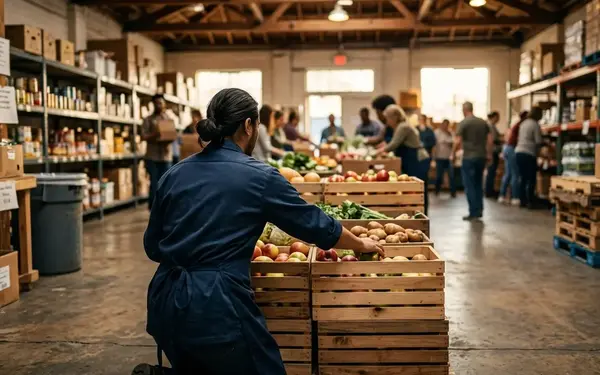
Expanded market access came down to payment mechanics as much as anything. In underserved corridors, satellite stands began accepting EBT and market-match dollars, several operating seasonally from May through early October. That is not a glamorous intervention. It is the difference between a market a family can use and one they walk past.
The structural change I find most durable is aggregation. The plan supported establishing points where multiple small growers pool product for institutional buyers—schools, hospitals, instead of each farm running its own delivery to a loading dock. The per-farm burden drops. A three-acre grower who could never fill an institutional order alone suddenly can, as part of a pool.
Regional agricultural extensions and local nonprofits supplied the connective infrastructure that made these arrangements hold. That kind of scaffolding matters; the NC State Extension Local Food resources are a reasonable starting point for organizers mapping who does what in the region.
One honest limit. Qualitative gains in food desert corridors ride entirely on transit and last-mile delivery. Where neither exists, adding a stand accomplishes little, because residents still cannot reach it. I have watched a neighborhood-supported model thrive in a walkable urban corridor and then fail when someone tried to transplant it to a rural stretch where the nearest cluster of producers sat more than 30 miles off, with no aggregation point in between. Same model, different ground, opposite result.
Navigating Policy for Local Growers
If you farm here or organize a garden, the plan is a lever—but only if you pull it in the right order. The guidance is built around sequence, and the sequence is deliberate: align your project with county sustainability goals before you request resources, not after. Proposals that name specific plan pillars read as partners to the county's own stated intent, and they move faster for it.
A working sequence
- Draft a land-use intent summary and submit it ahead of the Agricultural Advisory Board's meeting cycle. The Board convenes on a recurring schedule, not on demand—plan for a 60-to-90 day lead before expecting a resolution.
- Secure written land tenure of at least two to three growing seasons if you organize on leased or borrowed parcels. Do this before you seek institutional infrastructure support.
- Map your project to a pillar,conservation, justice, or sustainable practice, so reviewers can slot it against goals already on the books.
That tenure step is not bureaucratic theater. Growers on rented land without a multi-season commitment will find most institutional support channels simply closed, because funders require tenure assurance before they invest in fixed infrastructure. A wash station or a high tunnel is a capital bet, and no one bets on a parcel you might lose next year.
Treat the plan as an evolving document, because it is one. It rewards active participation from the agricultural community and goes stale without it. The version that helps you next season is partly the version you help write this one.
Pro Tip: Reference the exact pillar and the exact parcel when you submit. A summary that says "this advances sustainable practice on the two-acre lot at the corner of X" gives staff something concrete to place on an agenda. A summary that gestures at "community food access" gives them a reason to defer.
Your Next Step in Food Advocacy
Here is the instruction, and I want it narrow on purpose. Identify one specific zoning barrier in your own neighborhood—one ordinance or setback rule and the single parcel it affects, and draft a localized proposal to bring to the next Agricultural Advisory Board meeting.
Not a policy rewrite. Not a manifesto. One barrier, one parcel, one page. Coalition organizers noticed that broad calls to "get involved" produced enthusiasm and almost no filed proposals; the narrow ask is what actually reaches an agenda.
Submit it at least two weeks before the meeting so staff can place the item rather than push it to the next cycle. And find two or three neighbors to submit alongside you in the same cycle—a lone proposal rarely shifts an ordinance, but several coordinated ones on the same barrier start to look like a mandate.
Key Takeaway: Pick your one barrier this week, name the parcel, and get the summary to Board staff before the next deadline. The plan is only as strong as the residents who put it to work.






Responses
No comments yet.
Write a Comment