
A Vacant Mill-Cottage Lot Becomes a Food Access Decision
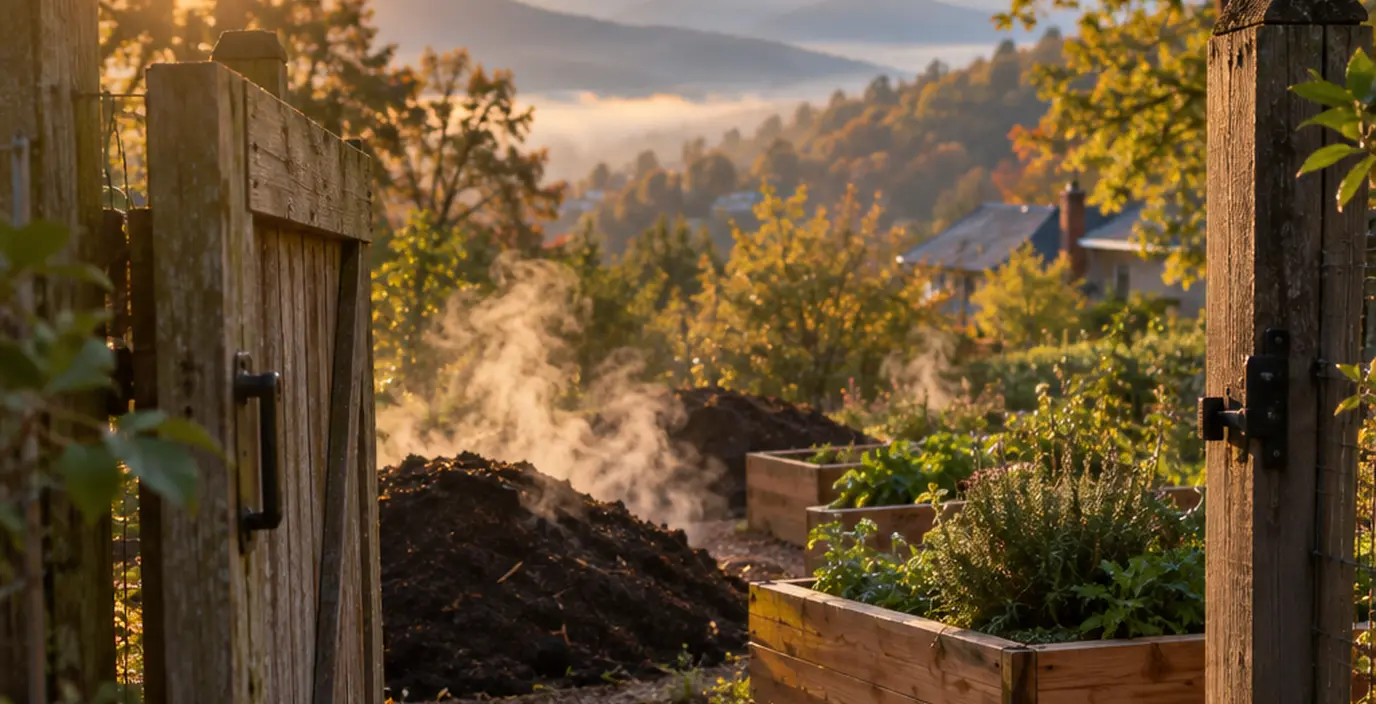
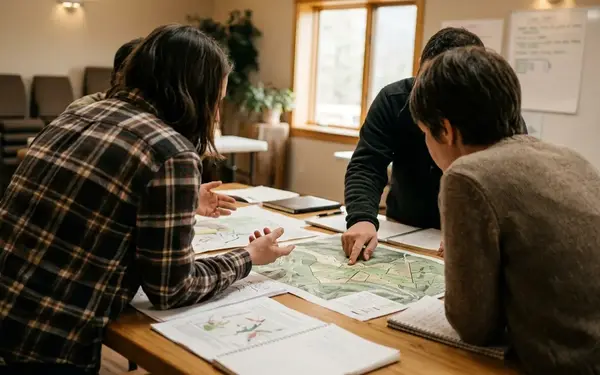
The first useful tool on this Buncombe County garden site was a length of rebar. Neighborhood organizers and AB Food Policy Council members pushed test rods through the turf, checking where buried rubble interrupted the soil. Between 10:00 AM and 4:00 PM, they tracked the shadows of mature oaks across the slope. Before discussing planting dates, they needed to understand the ground.
The parcel, hovering near a quarter acre, had stood vacant for 14 years after the demolition of two condemned mill cottages. Its southern slope, graded at 12 to 15 degrees, made the relationship between cultivation and runoff an immediate concern. The upper bench received roughly 6.5 to 7.5 hours of unobstructed midsummer sunlight, concentrating the practical growing area within a larger, uneven property.
For adjacent households, the vacancy carried a different set of consequences: unmaintained grass, repeated dumping, and land that contributed little to neighborhood life. Rising grocery costs sharpened the question of whether that space could support fresh food close to home.
The walkthrough translated that question into site-planning decisions. Organizers examined sunlight, rubble depth, slope, and the parcel's residential history together. A sunny patch offered growing potential; the hillside and demolition fill determined where further investigation and careful construction belonged.
This is the first planning lesson for a Buncombe County community garden: food access begins with the relationship between households and a workable site. A nearby parcel can shorten the distance between a kitchen and fresh produce. Its value also depends on who controls it, how water reaches it, and whether residents can sustain the work.
Neighbors Set the Rules Before Planting Begins
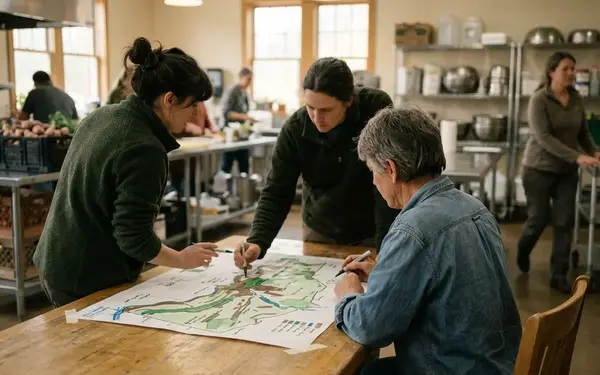
Voting authority stayed within walking distance of the garden. During three winter meetings in a neighbor's living room, organizers drafted bylaws reserving the seven steering committee seats for residents living within four blocks. Outside advocacy groups served as non-voting technical advisors.
That boundary gave resident leadership an enforceable structure. The committee could request help with land agreements, food security planning, or soil questions while retaining control over bed allocation, work expectations, and harvest distribution. An organization's ability to provide technical assistance did not confer a vote.
Maintenance, Money, and Doorstep Conversations
The committee divided responsibilities among site maintenance coordinators, treasury leads, and outreach liaisons. Maintenance coordinators organized tasks and tool access. Treasury leads tracked commitments and recurring bills. Outreach liaisons brought household preferences into decisions about crops and participation.
Over a short window in late February, the outreach team canvassed just under 45 households. Doorstep conversations reached retirees and working families whose schedules could keep them away from planning meetings. Asking which vegetables households would actually cook gave crop selection a practical basis: nutritious, culturally appropriate food has to fit the people receiving it.
Physical work then exposed a scheduling problem. On the first two Saturday workdays, attendance fell from 18 people to four by noon as exhaustion set in. The committee organized maintenance into predictable 90-minute shifts on Tuesdays and Thursdays, from 5:30 PM to 7:00 PM.
Those shorter blocks made the labor commitment legible. A resident could plan around a defined evening task rather than an open-ended day. For community initiatives, this distinction matters: initial enthusiasm recruits volunteers, while bounded responsibilities help retain them.
The governance structure joined those two needs. Residents held decision-making power, and the work schedule gave them a more manageable way to exercise it.
The Lease Protects the Growing Season; the Budget Keeps It Running
The private landowner wanted reassurance that garden improvements would leave the property title intact and avoid code problems associated with accessory structures. Growers needed enough security to justify importing soil, constructing beds, and tending crops through harvest.
The negotiated agreement established a three-year renewable land-use lease for an annual consideration of $1. It included a 120-day termination notice window and prohibited termination between April 1 and October 31. Those provisions connected legal tenure to the agricultural calendar: residents needed time to grow and harvest the crops they had planted.
Put Structures and Coverage in Writing
Through a regional fiscal sponsor, the garden obtained a $1,000,000 general liability rider with an annual premium of $425. The committee also kept the shed footprint at eight by ten feet, beneath the municipal threshold applicable to the site's permanent building permit requirement. Perimeter fencing and tool storage belonged in the same code-compliance review as the shed.
That shed arrangement addressed this parcel's municipal requirements; another neighborhood should check its own zoning and accessory-structure rules before buying materials.
The distinction between the fiscal sponsor and the steering committee remained important. Insurance administration sat with the sponsor, while resident bylaws governed garden decisions. Writing down both responsibilities reduced the chance that control over paperwork would become control over the harvest.
Separate Construction Money From Operating Money
Startup support could purchase visible improvements: lumber, soil amendments, and the equipment needed to establish beds. Local seed grants and civic donations served that phase. The recurring budget had a different rhythm, with mower fuel, replacement hoses, compost replenishment, and insurance returning after the opening workdays ended.
A useful treasury separates those commitments:
- Site establishment: bed framing, initial soil preparation, storage, and irrigation installation.
- Seasonal operation: water reimbursement, hose repairs, mowing supplies, and compost.
- Continuing obligations: insurance renewal, lease administration, and maintenance of shared infrastructure.
This makes fundraising more precise. A contribution toward a raised bed covers a construction task. Keeping that bed watered and accessible requires a continuing commitment.
Stored Rainwater Meets the Demands of a Clay Hillside
The municipal water connection threatened to consume the entire startup budget. The quoted $4,800 to $6,200 covered a dedicated street tap, backflow preventer, and meter box. The committee set that option aside and built a hybrid supply around roof runoff and supplemental water from an uphill neighbor.
Two linked, food-grade IBC totes provided 550 gallons of storage. Positioned behind the tool shed, the 275-gallon containers collected gutter runoff and stood 32 inches above ground on cinderblock piers. A written agreement established reimbursement for water drawn from the neighbor's spigot, with an inline brass meter tracking use.
The arrangement spread the water task across storage, delivery, and accounting. Rainwater supplied an on-site reserve. The neighbor agreement supplied pressurized backup. The meter made reimbursement a defined operating expense rather than an informal favor.
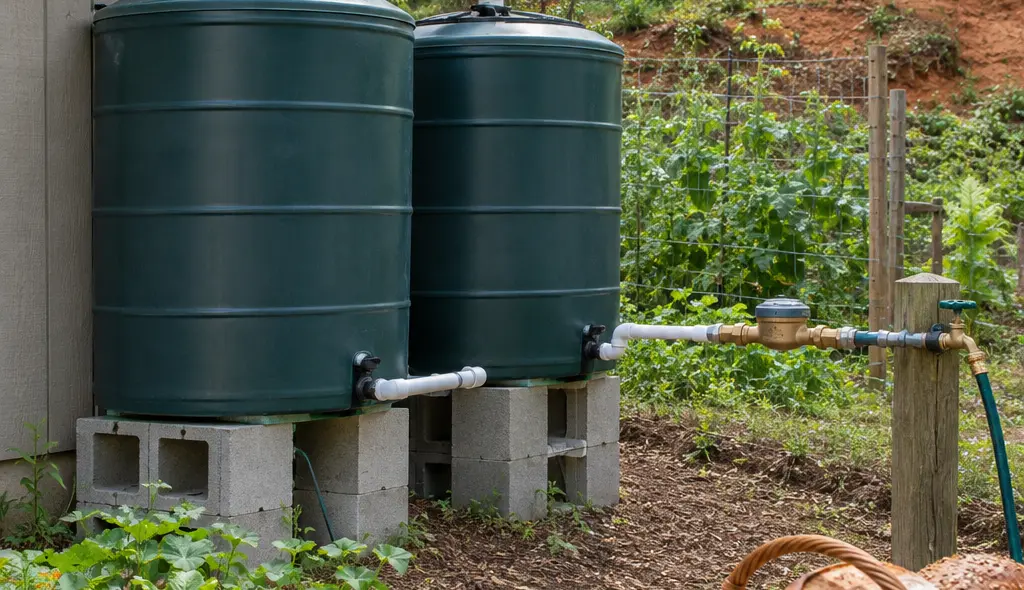
Test delivery at low storage levels: once the totes fall below half full, gravity pressure from their 32-inch elevation fails to distribute water evenly along drip runs longer than 25 feet, making bucket hauling or the pressurized neighbor connection necessary during August dry spells.
The transferable practice is a physical test before planting: run water through the intended hose route, check delivery at the farthest bed, and assign responsibility for changing supplies. A tank's capacity and a functioning irrigation route answer different planning questions.
Hold Construction Until Soil Results Are Reviewed
Below the turf, compacted mountain clay mixed with coal ash and brick fragments from the former residential site. The committee arranged heavy-metal testing for lead, arsenic, and cadmium through the state agricultural service. The 18-to-24-day turnaround belonged on the construction schedule.
Soil turning and timber framing must remain paused while those results are pending. Reviewing the findings comes before committing to bed locations, soil handling, and the construction plan. Procurement and governance work can continue during that interval without disturbing the fill.
The garden's construction approach used ten-inch-deep raised beds framed with untreated, rough-sawn hemlock, separating the growing root zone from the compacted native material. Broadforking and leaf mold addressed compaction in native growing plots after the testing review. Keeping those tasks distinct helped connect each intervention to its purpose: raised-bed construction, soil structure, and moisture management.
For sustainable agriculture on reused urban land, soil preparation starts with the site's history and test results, then proceeds to the physical work.
Household Beds and Shared Rows Serve Different Neighbors
A household plot gives its grower direct control over planting and harvest. Communal rows distribute responsibility across a work group and can supply neighbors who never rent a bed. The garden eventually used both arrangements, assigning each a clearer function.
The first season made the labor demands visible. Five of the 14 individual family plots developed seeding crabgrass and rotting squash after their holders' shift-work schedules changed. Productive beds stood beside neglected ones, making access appear tied to a household's ability to absorb an unpredictable maintenance burden.
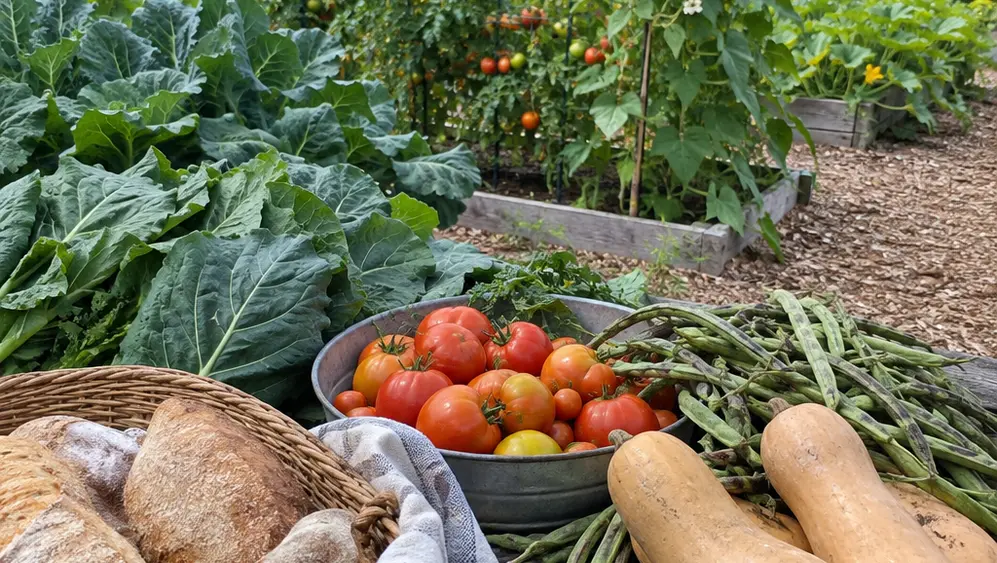
In November, the steering committee reclaimed neglected beds and assigned half the garden's footprint to communal production. The resulting space, shy of 650 square feet, supported collards, Roma tomatoes, butternut squash, and Rattlesnake pole beans. Regular Tuesday and Thursday work blocks supplied the shared labor.
This allocation preserved household growing space while creating a harvest stream for the wider neighborhood. It also made collective responsibility easier to assign: communal crops belonged on the maintenance schedule, with tasks carried across shifts.
Bring Distribution to the Garden Edge
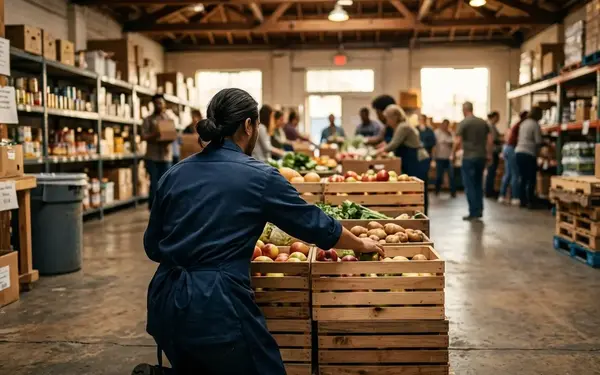
From mid-June through late October, the garden opened a Saturday distribution window from 9:00 AM to 11:00 AM. A folding table beneath shade created a weigh-and-share station at the perimeter. Bilingual signs helped non-gardening neighbors identify the pickup point and understand that they could take produce.
Weekly distribution included 15 to 25 pounds of surplus greens and summer squash. The scale gave the committee a record of food leaving the garden, while the table's location made collection possible without walking through household beds or seeking out a plot holder.
For equity evaluation, these are separate measures: food grown, food shared, and access to the sharing process. A productive garden contributes to neighborhood food security when its harvest reaches households beyond those with time to cultivate a plot.
Build the Next Buncombe Garden Around Recurring Work
Before preparing guidance for other neighborhoods, the steering committee reviewed two years of treasury receipts and volunteer sign-in sheets. Perimeter exclusion fencing and perennial border mowing emerged as the primary sources of second-year budget overruns and volunteer fatigue. Seeds and compost attracted attention at startup; keeping animals out and vegetation under control demanded sustained labor.
That review produced concrete pre-launch requirements. Organizers should physically test water transport and secure a signed land-use agreement lasting at least three years before breaking ground or committing money to timber beds and soil delivery. Resident voting rules, insurance responsibilities, and recurring maintenance assignments belong in that same preparation phase.
| Operational category | Startup assumption | Second-season reality | Pre-launch adjustment |
|---|---|---|---|
| Volunteer retention | Opening workdays will supply continuing labor. | Maintenance needs a predictable schedule that fits household commitments. | Assign bounded shifts and named task coordinators. |
| Deer and groundhog exclusion | Bed construction will dominate the physical work. | Perimeter exclusion requires materials, installation, and upkeep. | Budget for eight-foot woven-wire deer fencing and an 18-inch buried hardware-cloth apron. |
| Perennial borders | Planting beds will remain the main maintenance priority. | Border mowing consumes money and volunteer capacity. | Assign mowing responsibility and fund equipment operation before opening. |
For neighborhood policy & planning, the practical unit is the whole site: beds, borders, gates, water routes, and the people responsible for each. Advocacy can help secure resources for those functions while residents retain authority over their use.
When the next neighborhood lot becomes available, will its organizers give immediate residents permanent veto power over garden decisions and ownership of the shared harvest, even when an outside agency holds the insurance policy?





Responses
No comments yet.
Write a Comment