
In this Article
- The Evolution of Food Assistance and Nutritional Access
- The Mechanics of the Match: How the Program Works
- Where to Use Your Benefits in Western North Carolina
- Strategic Shopping for Maximum Value
- Understanding Program Scope and Daily Limits
- The Exchange in Practice
The Evolution of Food Assistance and Nutritional Access
From calories to dietary quality
The first principle of food assistance is simple: hunger prevention starts with purchasing power. A household cannot choose nourishing food when the food budget collapses before the week ends.
That logic shaped the early federal approach. The 1939 Food Stamp Plan responded to both farm surplus and household need. The 1964 Food Stamp Act then gave the modern program a clearer statutory frame, and the Supplemental Nutrition Assistance Program still carries that core function: helping eligible households buy food.
For decades, the policy architecture emphasized caloric adequacy. It asked whether families could get enough food, not whether they could reliably afford fresh produce at the same time rent, utilities, medication, and transportation pressed against the same account.
The nutrition incentive turn
The important shift came when food access advocates, public health staff, and agricultural partners named the gap more directly. Low-income households needed food dollars, but local farmers also needed steady customers for perishable crops. A tomato picked on Thursday does not wait politely for a procurement system designed around shelf-stable goods.
Congress authorized the Food Insecurity Nutrition Incentive program in the 2014 Farm Bill. The 2018 Farm Bill later reauthorized the grant stream as GusNIP. That federal structure did not invent the local impulse; nutrition incentive pilots had already begun appearing at Western North Carolina farmers markets around 2013 through 2015. What the grant model did was standardize a match that local organizers could explain in one sentence: spend SNAP, receive extra produce dollars.
Key Takeaway: Double Up Food Bucks works because it treats nutrition access and farm viability as linked problems, but the linkage holds most tightly for fresh, perishable produce sold directly to shoppers.
That boundary matters. The dual-solution frame does not extend to every food purchase. Shelf-stable groceries, wholesale transactions, and prepared foods sit outside the incentive design. The program grew from a specific theory of change: fresh fruits and vegetables cost less at the moment a household is ready to buy them, and a local grower receives fair compensation for crops already in the field.
The Mechanics of the Match: How the Program Works
The booth comes before the stall
At many Western North Carolina markets, the technical problem is not whether a farmer wants to accept SNAP. The problem is card processing. Small produce vendors rarely carry individual EBT terminals, and a market with dozens of stalls cannot expect every grower to manage separate equipment, settlement, and reporting.
So the market centralizes the transaction.
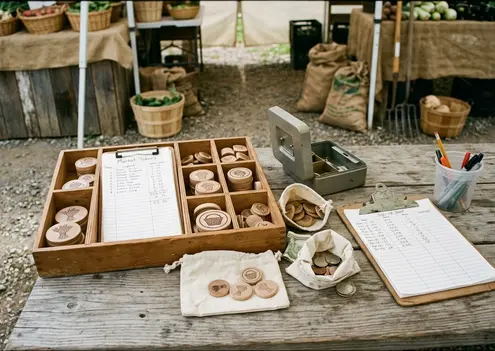
A shopper begins at the information booth or market manager table. The shopper swipes an EBT card for a whole-dollar amount and receives base tokens, often wooden or plastic, commonly in $1 and $5 denominations. Those base EBT tokens spend like cash on SNAP-eligible foods at participating vendor stalls.
Two token types, two rules
The Double Up match arrives separately. A shopper who swipes $10 in EBT may receive a $10 produce match if the market cap and funding pool allow it. The match tokens usually carry a different color, so vendors can distinguish them without a debate at the table.
That color separation carries the whole compliance system. Base EBT tokens can buy SNAP-eligible foods such as eggs, bread, meat, or produce. Match tokens buy only fresh, unprocessed fruits and vegetables. No hot foods. No baked goods. No meat, dairy, jam, salsa, or prepared items, even if the item would otherwise qualify under base SNAP rules.
Warning: A shopper who waits to swipe EBT at a vendor stall can miss the match entirely. The match is issued at the central EBT transaction, not after the shopping bag is already full.
Federal grants and local nonprofit partnerships keep this system alive. The grant pays into a match pool; the market manager issues tokens; vendors return tokens after market close for reimbursement. In Buncombe County food access work, that operational chain often touches the Asheville Buncombe Food Policy Council (ABFPC), market operators, community grocers, and outreach staff who translate rules into usable steps. The relevant trust signal is not a logo on a flyer. It is sustained coordination across enrollment, token handling, vendor reimbursement, and shopper communication during the active season.
One qualifier belongs here. These mechanics describe participating Double Up sites in Western North Carolina; exact caps, token colors, and end-of-season redemption dates come from each market manager’s current funding notice.
Where to Use Your Benefits in Western North Carolina
Start by identifying the venue type
Western North Carolina uses several access points rather than one single storefront model. A shopper may find Double Up Food Bucks at Saturday farmers markets, midweek neighborhood markets, seasonal mobile market stops, and a small number of independent community grocers.
The ground-level experience changes by venue. A downtown Asheville market may run at peak foot traffic between 9 and noon, with produce stacked three rows deep and a line at the information booth. A mobile market may carry fewer items but land closer to an apartment complex, senior housing site, school, or transit route.
Policy makes the benefit possible. Market design decides whether a person can use it before the bus leaves.
Find the manager first
At a larger market, do not start with the prettiest stall. Start with the manager.
That advice sounds small, but it prevents the most common transaction error. In a market with 30-plus stalls, the EBT terminal rarely sits at the entrance. Match tokens must be issued before shopping. If the shopper fills a bag first, then searches for the terminal, the vendor may have to hold produce while the shopper walks back across the market.
Participating vendors often display a green-and-white sign that says SNAP welcome here or Double Up. If a stall has no sign, ask directly. Farmers know whether they can accept base tokens, match tokens, or neither. A clear question saves embarrassment: “Can I use Double Up tokens for these peppers?”
Local food access work tends to move through named people, not abstract systems. A Program Coordinator such as Gina Smith at French Broad Food Coop, a Katie Souris Council representative conversation at an ABFPC meeting, a West Village Market donor and partner check-in, or an ASAP Local Food Experience event can all sit upstream from the same shopper-facing question: where is the working terminal today?
Mobile markets need one extra check. A stop that matched benefits weekly in August may pause after first frost, shift to biweekly service, or close its EBT terminal when seasonal grant funding changes. The route on memory may not match the route on that week’s schedule.
Strategic Shopping for Maximum Value
Plan around the harvest, not the recipe first
The best Double Up strategy starts before the market opens. It starts with the crop calendar.
In Western North Carolina, peak produce volume and lower prices cluster from late June through early October. Tomatoes, squash, beans, peppers, cucumbers, melons, and peaches arrive in visible abundance. Leafy greens and root crops stretch the useful market window into November when growers use hoop houses and cold frames.
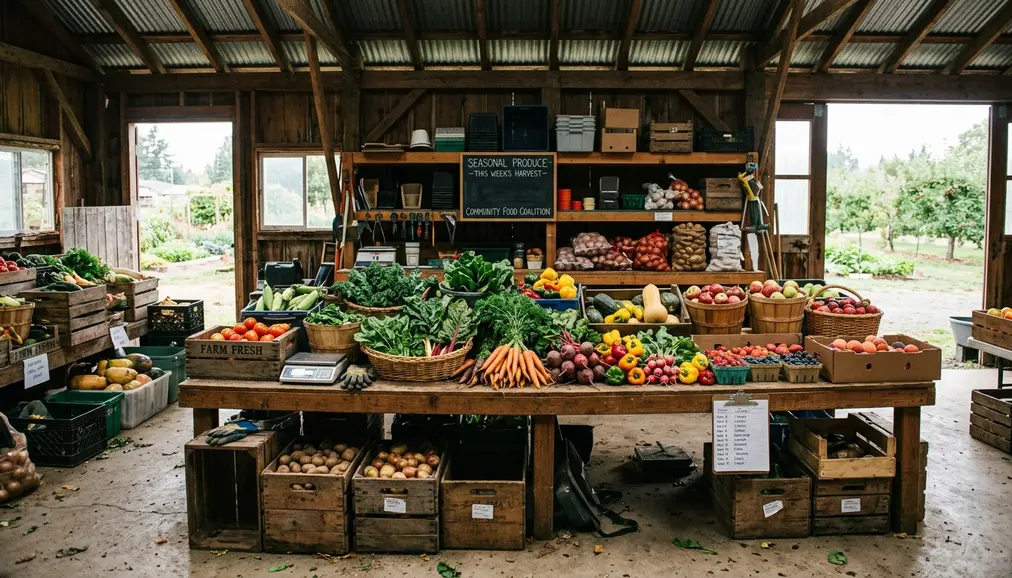
A shopper who builds the week’s meals around what farms are harvesting can carry home more food for the same SNAP balance. That does not require a perfect meal plan. It can mean choosing collards instead of bagged salad, field tomatoes instead of out-of-season tomatoes, or a box of bruised peaches for freezing instead of a few flawless pieces for the counter.
Use the match cap as a planning tool
The daily cap changes how larger purchases should happen. If the market offers a match per household per market day, then a large produce purchase may stretch farther when split across more than one visit. This is not gaming the system. It is using the program as designed.
Daily caps commonly run somewhere between $20 and $40 per household per market day, depending on seasonal funding. Some markets tighten caps in shoulder season as the grant pool draws down. A household planning tomato sauce, frozen berries, or blanched greens should ask the booth manager about the current cap before deciding how much EBT to swipe.
Pro Tip: Ask farmers about seconds near closing time. Blemished tomatoes, oddly shaped squash, or very ripe fruit can sell for roughly a quarter to a third off standard stall pricing, especially when purchased by the box for preserving.
The preservation strategy has a hard edge. Bulk produce only saves money if the household can can, freeze, dry, share, or cook it before spoilage sets in. A borrowed pressure canner, freezer space at a relative’s home, or a shared afternoon of chopping with a neighbor can turn the match into stored winter food. Without that equipment or time, a bargain box becomes compost too quickly.
First-visit Double Up Food Bucks checklist
- Bring the EBT card and check the available SNAP balance before leaving home.
- Go to the market information booth or manager table before shopping any stall.
- Swipe EBT for the amount intended for that visit and receive base tokens.
- Ask what the current Double Up match cap is for that market day.
- Confirm which token color buys fresh fruits and vegetables only.
- Look for SNAP welcome here or Double Up signs, and ask vendors when signage is unclear.
- Use or track tokens before the active market season ends.
Understanding Program Scope and Daily Limits
The eligibility line prevents stall-side conflict
The cleanest way to protect the program is to respect the token rule at the stall. Match tokens buy fresh fruits and vegetables only. That includes items such as apples, greens, carrots, tomatoes, peppers, berries, potatoes, and squash when sold fresh and unprocessed.
It does not include hot food, prepared food, baked goods, meat, dairy, eggs, honey, jam, salsa, pickles, or processed items. Some of those foods may qualify for base SNAP purchase. They still do not qualify for the Double Up match.
This distinction can feel technical, but it carries real consequences. The vendor does not set the federal eligibility boundary. The market manager cannot rewrite it because a product is locally made. A certified kitchen label does not convert a prepared food into a fresh produce purchase.
Caps, seasons, and token expiration
Daily limits exist because the match pool is finite. A market may match up to one amount in July and a lower amount later in the season. When produce volume falls and grant dollars draw down, managers often adjust the cap to keep the program available for more households through the remaining market days.
Token expiration also varies. Some markets honor tokens only through the active season and void unused tokens at season’s end. Tokens received in October may not work the following spring. Shoppers should ask two direct questions at the booth: “What is today’s match cap?” and “When do these tokens expire?”
There is also a geography rule hiding inside the token. A farmer selling at an unaffiliated roadside stand cannot process the same tokens simply because the farmer accepts cash or grows eligible produce. The reimbursement loop depends on the market manager counting tokens with vendors after the market closes and settling payment through the participating site.
That is why the manager table matters so much. It is not just customer service. It is the control point that keeps benefits, match funds, vendor reimbursement, and federal rules aligned.
The Exchange in Practice
A Saturday morning in Asheville
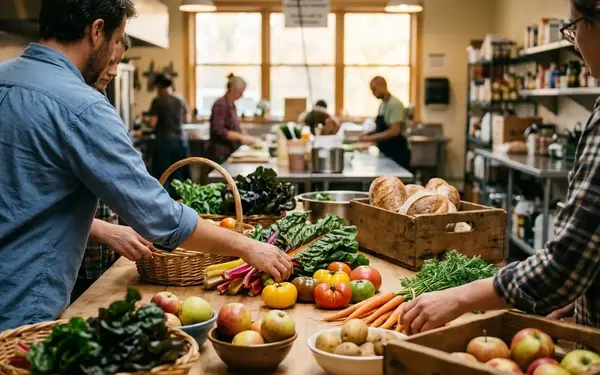
By late morning, the Asheville market has the sound of a place doing many kinds of work at once. A busker tunes between songs. A child points at strawberries. Someone asks whether the eggs are sold out. The information booth has already handled a small rush of EBT swipes, and the cigar box behind one produce stall has begun to fill with wood and green.
A shopper steps to the table where collard greens sit in tight bundles, stems lined up, leaves still cool from the morning cut. The farmer names the price. The shopper counts out two wooden $1 tokens and one green match token, then places them across the table.
The farmer takes the tokens without lowering the tone of the exchange. No special line. No separate bag. The greens go into the shopper’s tote with the same practiced motion used for any other customer.
After close, the farmer will count those tokens with the market manager and redeem them through the participating market’s settlement process. For now, the moment is smaller and more direct: a bundle of collards leaves the stall, a local grower gets paid, and a household carries home food cut from Buncombe County soil that morning.





Responses
No comments yet.
Write a Comment